
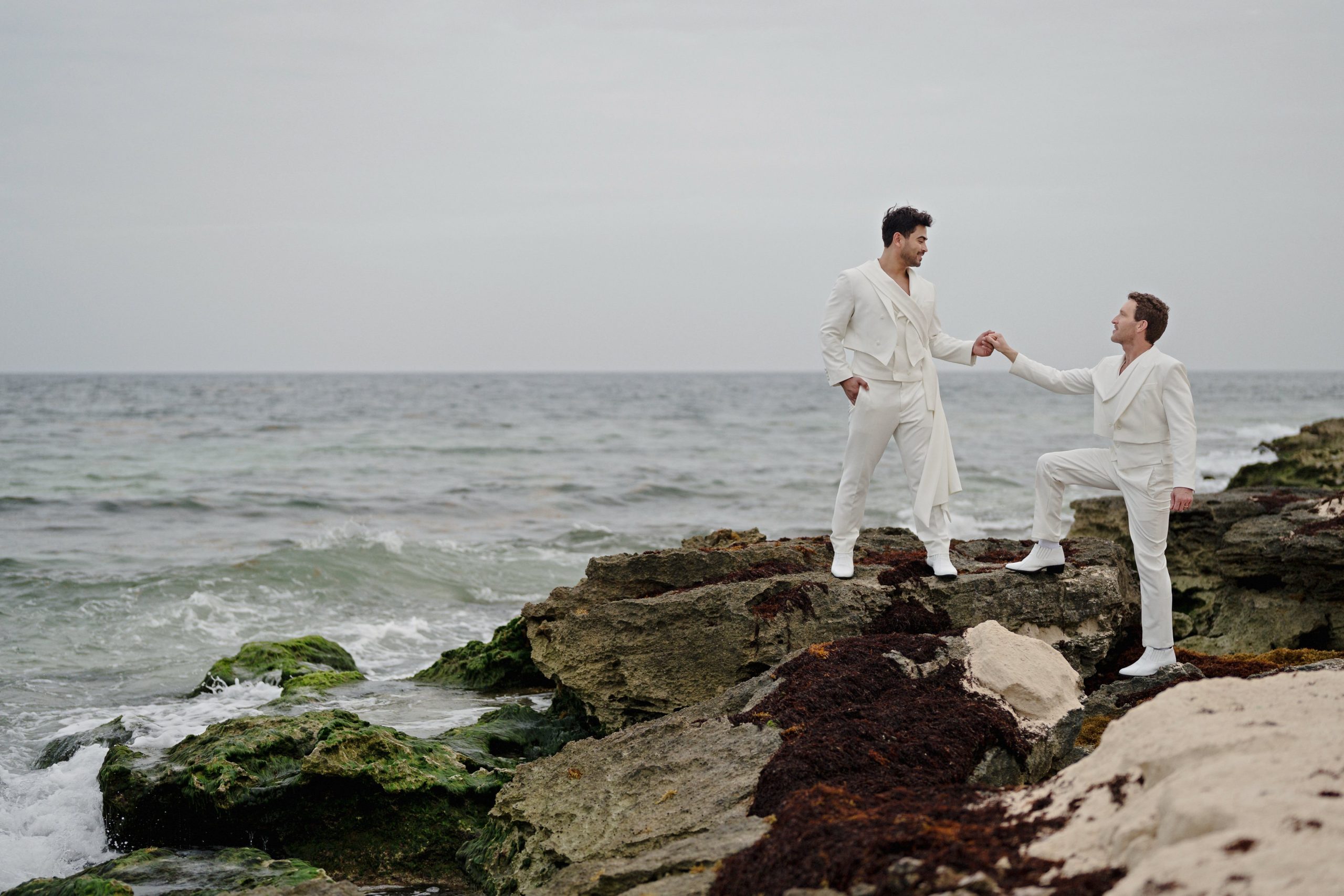
Planning a gay destination wedding comes with questions straight couples rarely have to ask: Will the resort staff treat us like any other couple? Will we, and our guests, feel safe and welcome the whole trip? For LGBTQ+ couples, the first question isn’t just where, it’s whether your marriage can be recognized there, or whether a symbolic ceremony is the better fit.
Where Can Same-Sex Couples Have a Destination Wedding?
Same-sex marriage is legal in Mexico (all 32 states since 2022), Costa Rica (since 2020), and Aruba (since July 12, 2024), so couples can sign the official paperwork there. In the Dominican Republic, only symbolic ceremonies are possible. We never recommend Jamaica.
Yellow Umbrella Events is a New Braunfels, Texas destination wedding travel agency that specializes in Hotel Xcaret Mexico and other all-inclusive resorts, and we have planned 600+ destination weddings. Our planning services are completely complimentary. The resort pays us, and you pay the same rate you would booking directly.
What Is the Difference Between Marrying at Your Destination and a Symbolic Ceremony?
Here’s the difference in a nutshell:
- Marriage at your destination: You sign the official paperwork at your destination, and you come home married.
- Symbolic ceremony: You have the full wedding experience, including vows, officiant, flowers, dinner, and dancing, but the legal part happens at home, before or after the trip. Most couples (same-sex or otherwise) choose this even where marriage at the destination is available, because it means lower costs and far less paperwork abroad.
Below, we break down four popular destination wedding locations, plus one we don’t recommend.
Can Same-Sex Couples Marry in Mexico?
Status: marriage available. Same-sex marriage has been legal in all 32 Mexican states since 2022, when Tamaulipas became the last state to approve it. Same-sex couples follow the same procedure as any other couple.
Mexico is one of the destinations we explore most often with couples. It has a wide selection of welcoming all-inclusive resorts, beautiful wedding settings, and an established destination wedding industry that embraces same-sex couples. Popular regions include Cancun and the Riviera Maya, Los Cabos, and Puerto Vallarta, which is long known as one of the most LGBTQ+-friendly beach towns in Latin America.

What Marrying in Mexico Involves
Only a marriage performed through the Civil Registry (Registro Civil) is recognized by law. You don’t need to be a Mexican resident, but expect a lot of paperwork. Requirements vary by state and typically include:
- Valid passports
- Legal birth certificates
- Final divorce decree, if divorced
- Completed marriage application
- Apostilled birth certificates, translated into Spanish by an official translator
- A basic health screening with blood work completed in Mexico before the license is issued
- 4 witnesses
- Arrival 2 to 4 business days prior to the ceremony
Good to know: Many couples prefer a symbolic ceremony in Mexico and handle the marriage paperwork at home. It skips the apostilles and translations while keeping every bit of the celebration. You can do this prior to your wedding, at home in your local county clerk’s office.
Be aware: It’s important to note that even though same-sex marriage is legal in Mexico, there are certain resorts (Palace Resort brands) that will still not allow same-sex weddings, even if they are symbolic, unfortunately.
Can Same-Sex Couples Marry in Costa Rica?
Status: marriage available. In May 2020, Costa Rica became the first country in Central America to legalize same-sex marriage. Same-sex couples marry under the same rules as everyone else.
Costa Rica is a great fit for couples who want lush rainforests, waterfalls, volcano views, and Pacific beaches, and all of this just a short flight from the U.S. Guanacaste and the Pacific coast are especially popular for resort weddings.
What Marrying in Costa Rica Involves
Costa Rica is one of the easier places to marry. There’s no residency requirement and no blood test. The marriage is performed by a Notario Público (a notary who is also a licensed attorney) who then files it with the Civil Registry.
- Valid passports
- Ceremony and filing by a Notario Público
- Registration with the Civil Registry, which can take a few months before the official certificate is ready
- Apostille of the certificate, then recording it at home
Good to know: Even here, most destination weddings are still symbolic, and this is what we recommend.
Is Aruba a Welcoming Destination for Same-Sex Couples?
Status: marriage available. Same-sex marriage became legal in Aruba on July 12, 2024, when the Supreme Court of the Netherlands ruled that excluding same-sex couples from marriage was discriminatory, so same-sex couples can now marry in the same way as opposite-sex couples. Aruba also bans discrimination based on sexual orientation.
Aruba is a great choice for couples who want reliable sunshine since it sits outside the hurricane belt, which means you never have to worry about a hurricane changing your wedding plans.
What Marrying in Aruba Involves
Aruba allows non-residents to marry, but the paperwork must be submitted to the Civil Registry well in advance. Expect to provide passports, apostilled birth certificates, and proof that you’re free to marry, along with witnesses on the day. Your chosen resort can confirm the current deadlines and document list when you book, if you choose the official marriage route.
Good to know: The island is regularly promoted as “One Happy Island” and has a strong reputation for warmth. There are even planners that specialize in gay and LGBTQ+ weddings.
Can You Have a Same-Sex Wedding in the Dominican Republic?
Status: symbolic ceremony only. The Dominican Republic’s constitution explicitly bans same-sex marriage and in November 2025, the country’s Central Electoral Board reaffirmed that it does not and will not register same-sex marriages.
That said, same-sex relationships are legal, and even the US State Department has noted that same-sex relationships and LGBT events face no legal restrictions there. Destinations like Punta Cana offer a huge range of all-inclusive resorts, and many welcome LGBTQ+ couples for symbolic celebrations.
How it works: Complete your marriage paperwork at home before or after your trip, then celebrate with a symbolic ceremony at the resort. It’s the full wedding experience: vows, setting, and reception, without the legal paperwork.
Good to know: Resort policies on same-sex ceremonies vary, and the country has few legal protections against discrimination. We only recommend properties we’ve confirmed are welcoming, and we’ll walk you through what to expect. As in Mexico, Palace Resorts specifically do not allow same-sex weddings at their resort.
Why Do We Never Recommend Jamaica for a Same-Sex Wedding?
Status: not recommended. Jamaica is a beautiful island, but we don’t recommend it for LGBTQ+ weddings at all.
Same-sex marriage isn’t recognized, and Jamaica still has a colonial-era “buggery” law that criminalizes same-sex intimacy between men, carrying up to 10 years in prison. Insanity, right?
The Inter-American Commission on Human Rights has called on Jamaica to repeal these laws, finding they legitimize violence against LGBTQ+ people. Legal challenges are ongoing, but the law remains in force today.
Beyond the law, there is still widespread social hostility toward the community. Your wedding should be a celebration where you and your guests feel completely safe and welcome, and there are many other great destinations where that’s a given.
Gay Destination Wedding Options at a Glance
|
Destination |
Marriage available? |
Known for |
|---|---|---|
|
Mexico |
Yes, since 2022 |
Wide selection of welcoming all-inclusive resorts |
|
Costa Rica |
Yes, since 2020 |
Rainforest-meets-beach settings, simple paperwork |
|
Aruba |
Yes, since 2024 |
Reliable sunshine, outside the hurricane belt |
|
Dominican Republic |
No, symbolic only |
Resort celebrations with marriage paperwork completed at home |
|
Jamaica |
No |
Not recommended |
How Do You Find the Right Destination for Your Wedding?
The right destination for you will depend on your priorities, the type of wedding you envision, your guests, and the resort experience you’re looking for. Do you want to come home married, or keep it simple with a symbolic ceremony? Is a big guest list easy to fly in? Do you want an adults-only resort or a family-friendly one?
We can also discuss other destinations in our portfolio, taking local laws, resort policies, and travel considerations into account. Laws and requirements change, so we’re always on top of what is happening in each region. We can also manage a group room block so your guests can book together.
Have questions about a destination? Ask us anything, from legal requirements to which resorts truly welcome same-sex couples. That’s what we’re here for. Reach out to Yellow Umbrella Events and let’s start planning. Our planning services are completely complimentary.
Same Sex Destination Wedding FAQs
Same-sex marriage is legal in Mexico (all 32 states since 2022), Costa Rica (since 2020), and Aruba (since July 12, 2024), so couples can sign the official paperwork at those destinations. In the Dominican Republic, only symbolic ceremonies are possible. We never recommend Jamaica.
With a marriage at your destination, you sign the official paperwork there and come home married. With a symbolic ceremony, you have the full wedding experience, but the legal part happens at home, before or after the trip. Most couples choose a symbolic ceremony because it means lower costs and far less paperwork abroad.
Same-sex couples follow the same procedure as any other couple, and you don’t need to be a Mexican resident. Requirements vary by state and typically include valid passports, apostilled and translated birth certificates, a completed marriage application, a health screening with blood work completed in Mexico, 4 witnesses, and arrival 2 to 4 business days before the ceremony. Many couples handle the marriage paperwork at home instead and hold a symbolic ceremony in Mexico.